Chatbot basics

How AI chatbots work, why they make things up, and what makes an answer trustworthy.

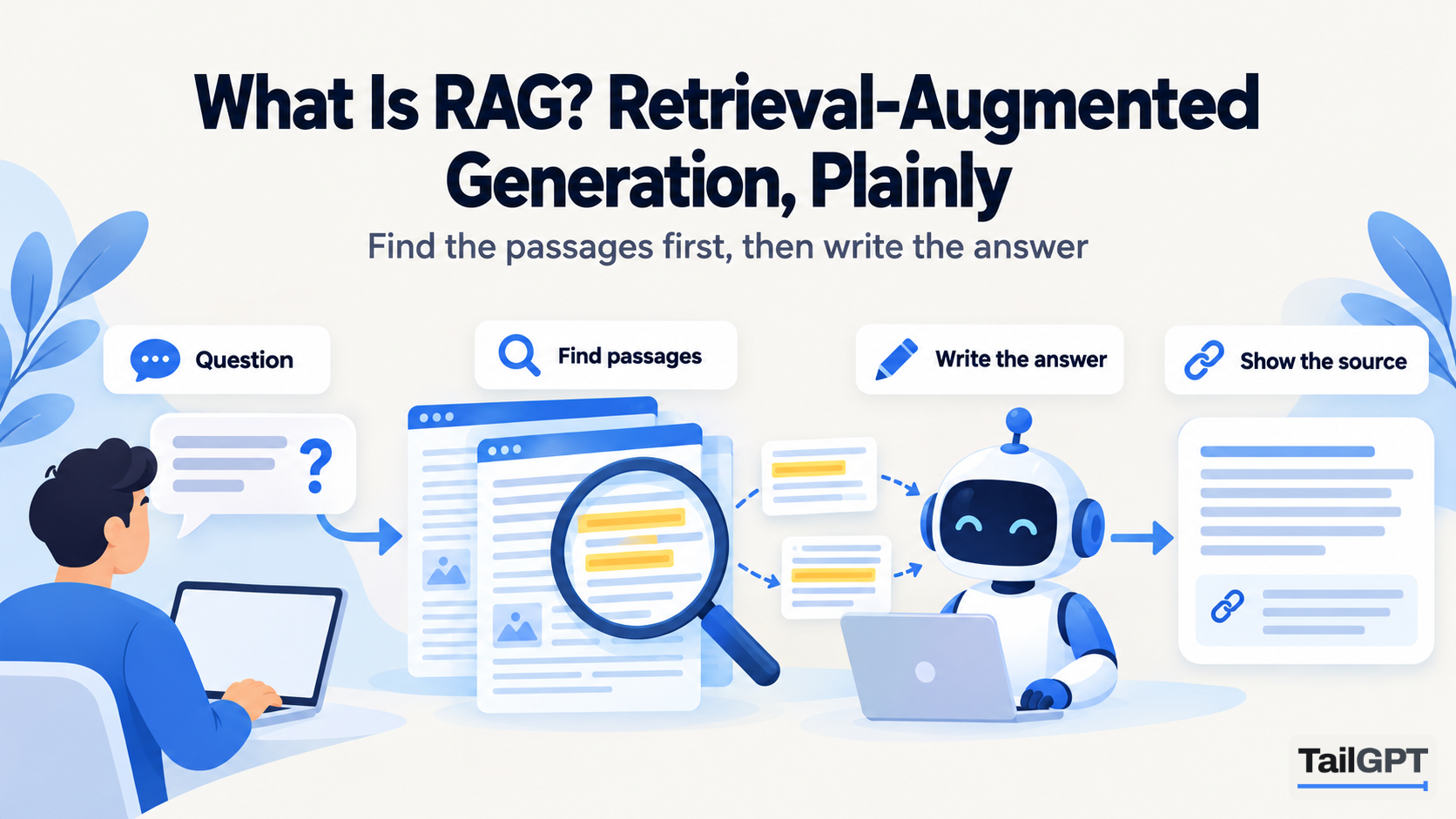
  1. What is RAG, retrieval-augmented generation: a person's question, a magnifier finding passages in pages, a robot writing the answer and showing the source

    Chatbot basics

    What Is RAG? Retrieval-Augmented Generation, Plainly

    RAG, or retrieval-augmented generation, means a chatbot first finds the passages that match a question, then writes its answer from them instead of from general knowledge. On a website it is what lets answers come from your own pages. TailGPT uses it with strict rules: answer only from your pages, and say so when nothing matches.

    Siddharth Kajaria · 7 October 2026 · 8 min read

    Read
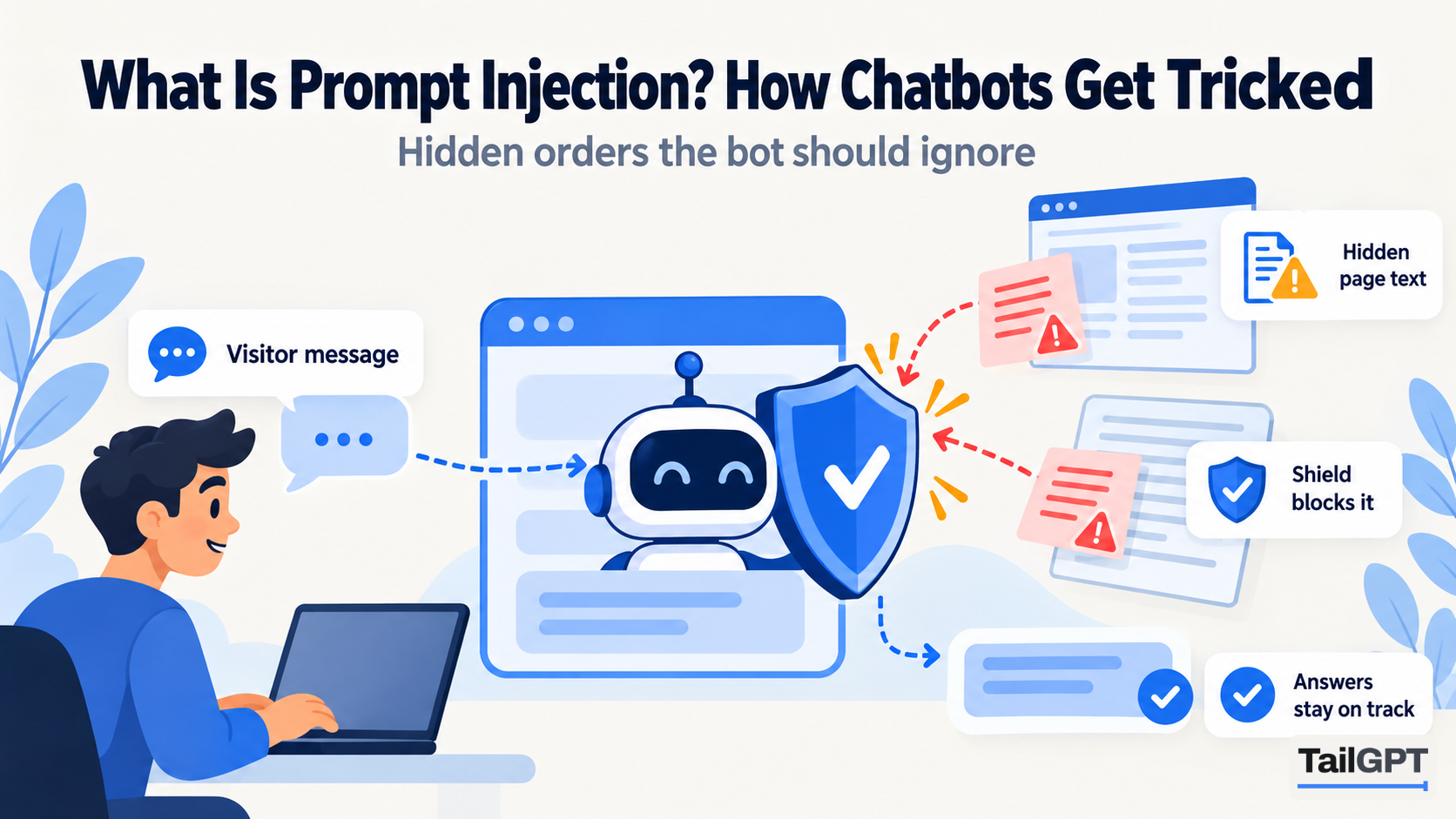
  2. What is prompt injection: a visitor's message and hidden page text with warnings reaching a robot behind a shield that blocks them, so the answers stay on track

    Chatbot basics

    What Is Prompt Injection? How Chatbots Get Tricked

    Prompt injection is an attempt to slip instructions into a chatbot, through a visitor's question or text hidden in a page or document, so it ignores its rules. TailGPT refuses such orders with one fixed sentence, marks instructions found in your content as material to read, and never charges a question for a refusal.

    Siddharth Kajaria · 7 October 2026 · 10 min read

    Read
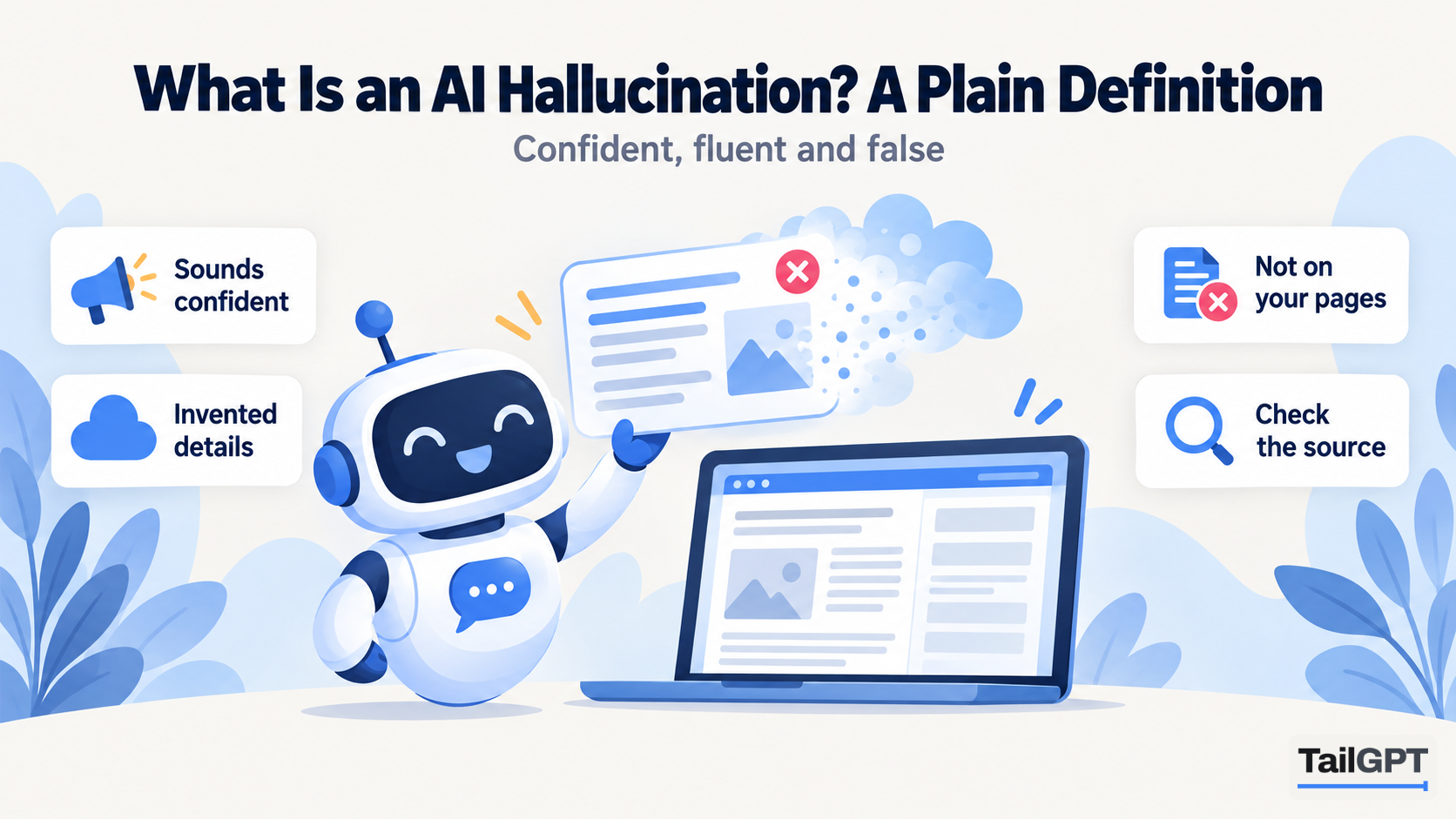
  3. What is an AI hallucination: a confident robot holding up an answer that dissolves into mist; sounds confident, invented details, not on the site's pages, check the source

    Chatbot basics

    What Is an AI Hallucination? A Plain Definition

    An AI hallucination is a confident, fluent answer that is false or not supported by anything the AI was given, such as an invented refund window or a made-up phone number. It happens because models write likely-sounding text. TailGPT reduces it by answering only from your pages and checking each answer after it is written.

    Siddharth Kajaria · 7 October 2026 · 8 min read

    Read
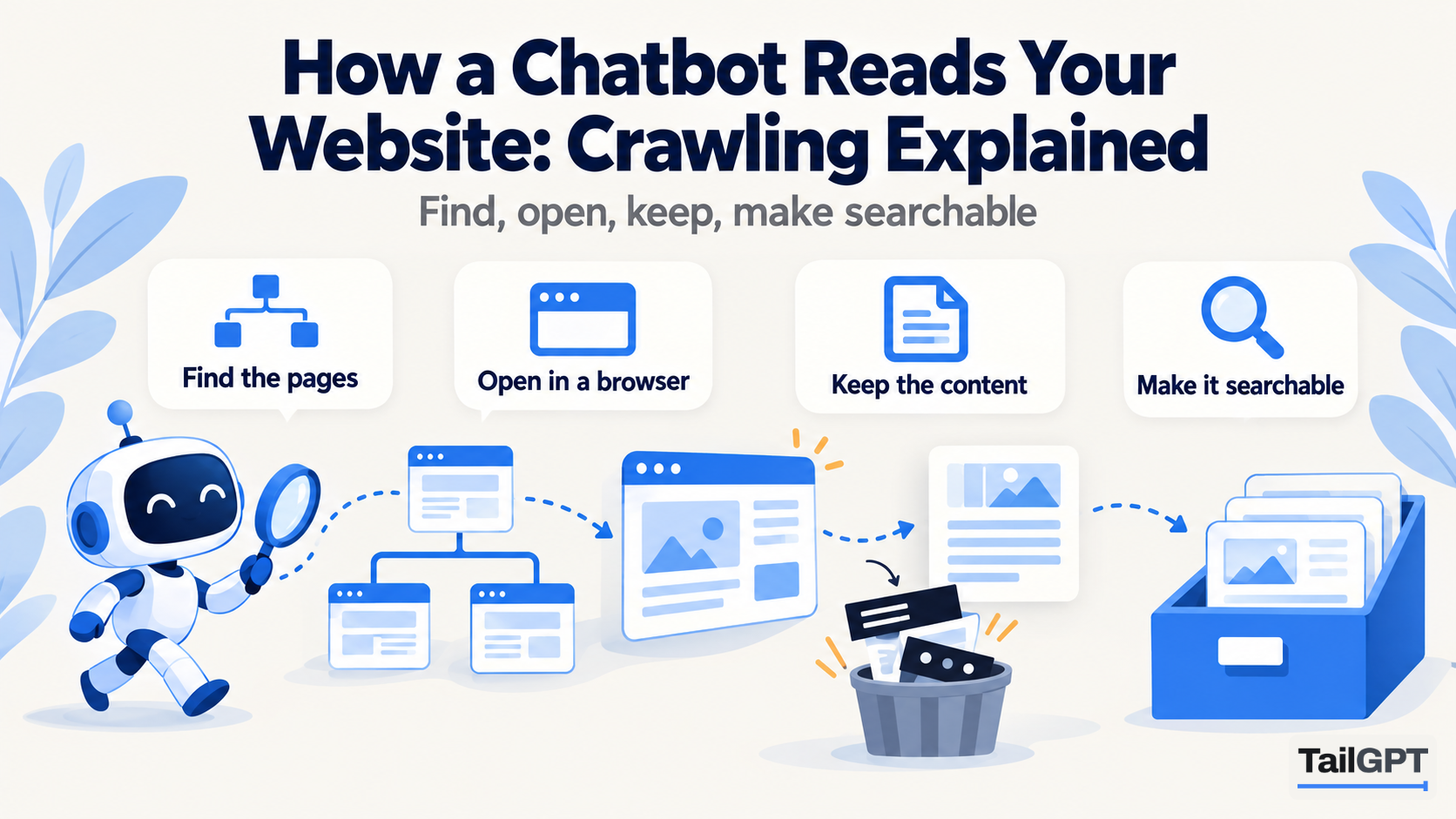
  4. How a chatbot reads a website, crawling explained: a robot with a magnifier finds pages, opens them in a browser, keeps the content and files it to be searchable

    Chatbot basics

    How a Chatbot Reads Your Website: Crawling Explained

    A website chatbot reads your site in four steps: it finds pages from the site's own page list (its sitemap), opens each in a real browser, keeps the real content while dropping menus and banners, then makes it searchable by meaning. TailGPT works this way and shows which pages failed and why.

    Siddharth Kajaria · 7 October 2026 · 10 min read

    Read
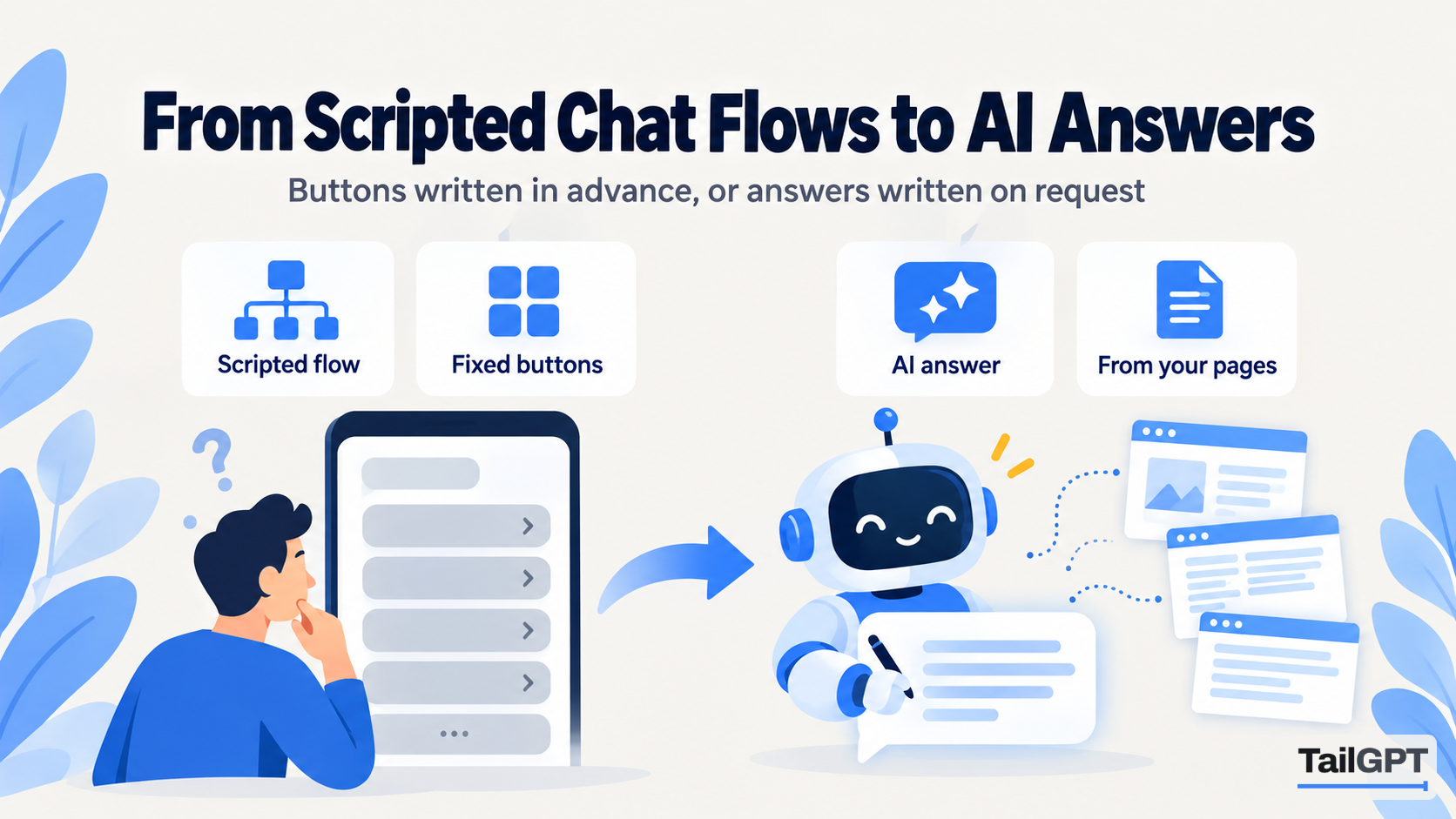
  5. From scripted chat flows to AI answers: a puzzled man at a phone of fixed buttons, then a robot writing an answer from web pages; scripted flow, fixed buttons, AI answer

    Chatbot basics

    From scripted chat flows to AI answers

    A scripted chat flow is a tree of buttons and replies written in advance; an AI answer is written when the visitor asks, from your website's pages. TailGPT is the second kind: it answers only from your chosen pages and documents. Flows still suit fixed tasks such as bookings and forms, which TailGPT does not do.

    Siddharth Kajaria · 7 October 2026 · 9 min read

    Read
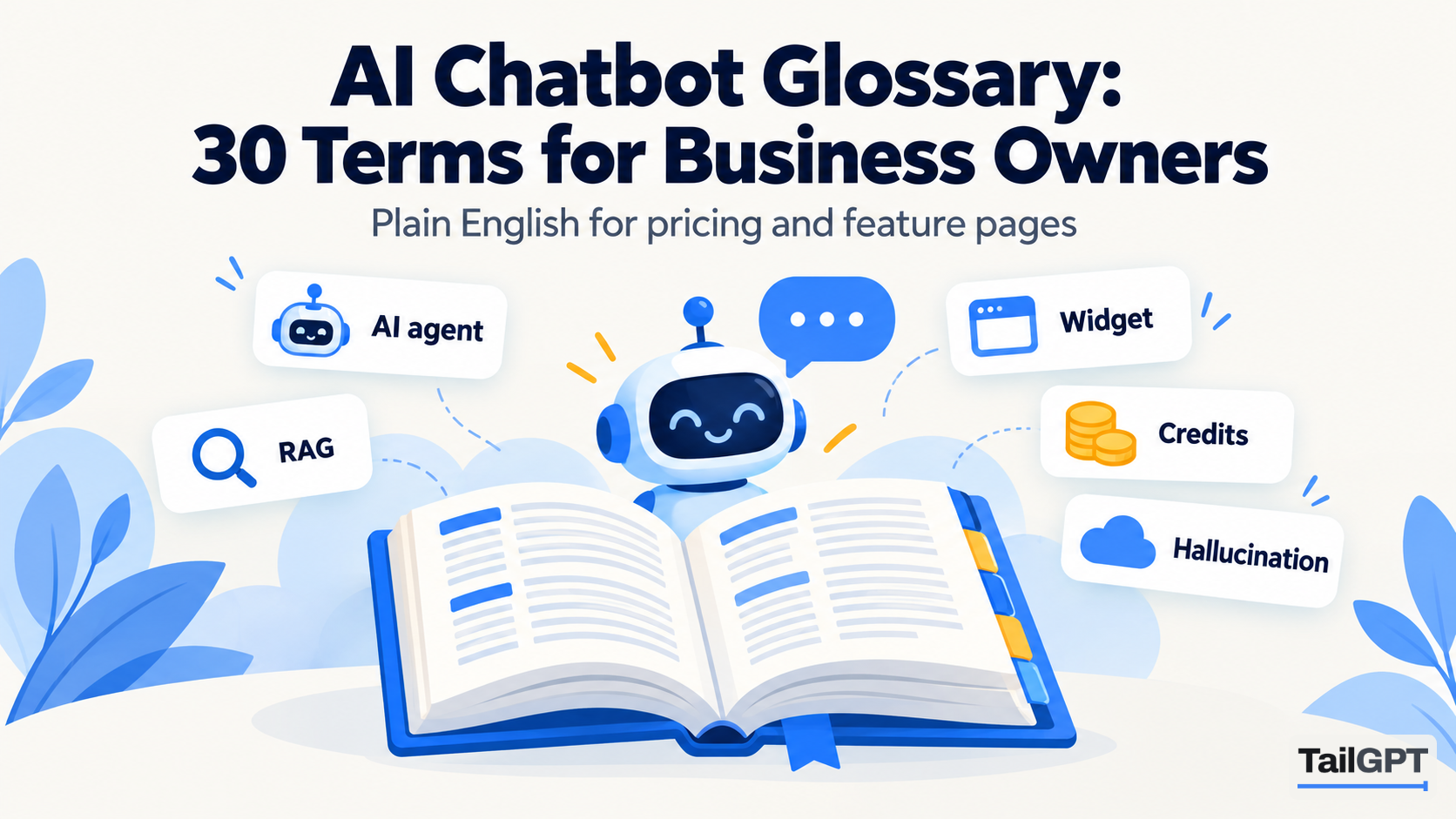
  6. AI chatbot glossary, 30 terms for business owners: a robot over an open book, with labels for AI agent, RAG, widget, credits and hallucination

    Chatbot basics

    AI Chatbot Glossary: 30 Terms for Business Owners

    This glossary defines 30 terms you meet on AI chatbot pricing and feature pages, from AI agent to widget, in plain English. Where it helps, each entry says how TailGPT handles it, such as counting questions instead of credits and answering only from your pages and documents.

    Siddharth Kajaria · 7 October 2026 · 11 min read

    Read
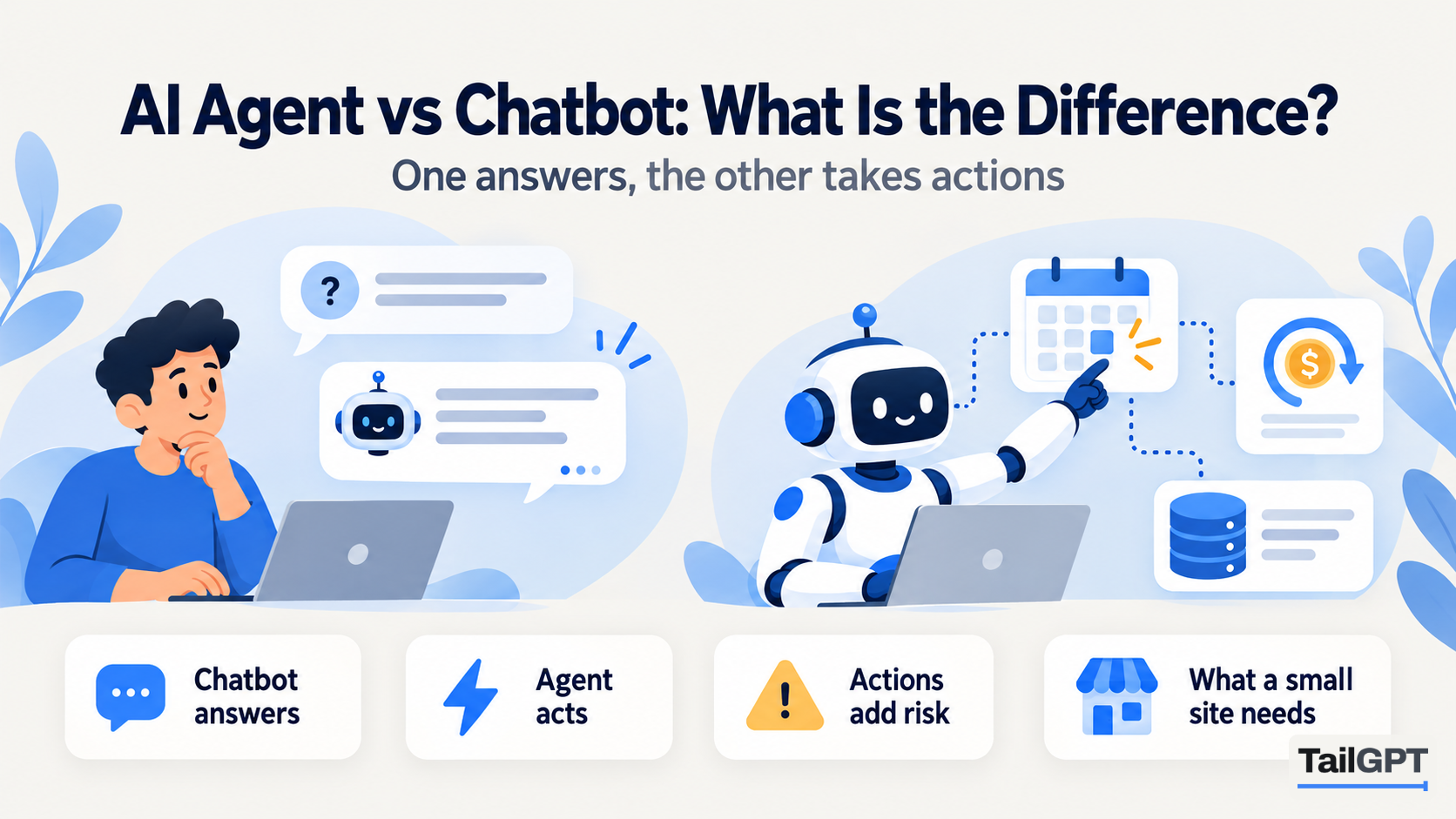
  7. AI agent vs chatbot: a person asking a chatbot a question beside a robot booking a calendar slot and a refund; tiles: chatbot answers, agent acts, actions add risk, what a small site needs

    Chatbot basics

    AI Agent vs Chatbot: What Is the Difference?

    A chatbot answers questions; an AI agent also takes actions, such as booking, refunding or updating a record, using tools connected to your systems. Most small websites need answers first, because every action adds risk. TailGPT is an answer bot: it answers from your website's pages and documents and takes no actions.

    Siddharth Kajaria · 7 October 2026 · 10 min read

    Read
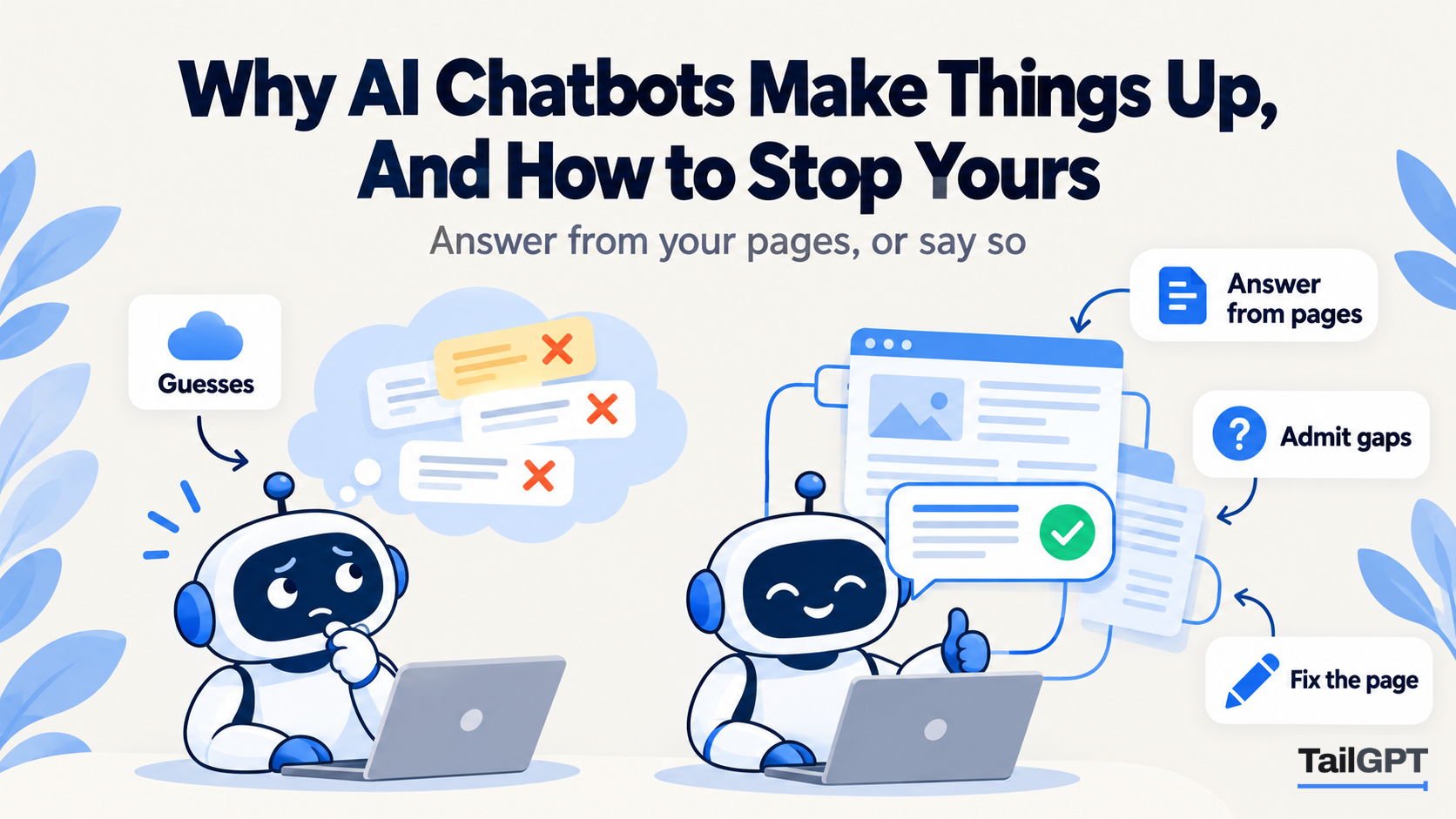
  8. Why AI chatbots make things up: a worried robot with guessed answers crossed out beside a happy one answering from pages; admit gaps, fix the page

    Chatbot basics

    Why AI Chatbots Make Things Up, And How to Stop Yours

    A general chatbot answers from everything it has ever read. When your website does not say what a visitor asked, it guesses - and a guess about your delivery times sounds exactly like a fact. A chatbot that reads only your pages has nothing to invent from, and the honest answer to an uncovered question is that it is uncovered.

    Siddharth Kajaria · 20 September 2026 · 4 min read

    Read
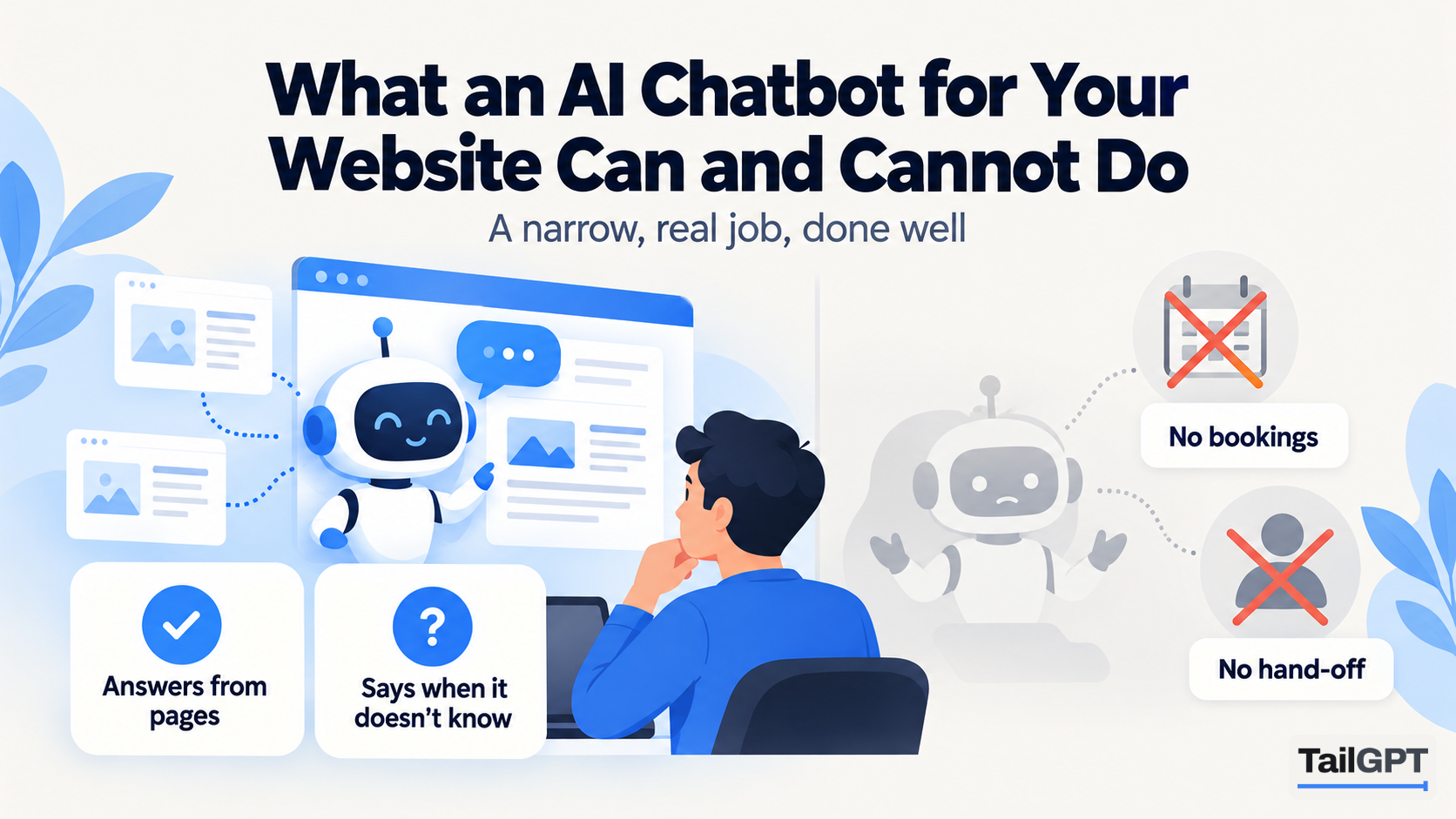
  9. What an AI chatbot for a website can and cannot do: a bot answering from pages and saying when it doesn't know, beside a greyed bot with bookings and hand-off crossed out

    Chatbot basics

    What an AI Chatbot for Your Website Can and Cannot Do

    An AI chatbot on your website reads the pages you choose and answers visitors from them. It is useful for a narrow, real job, and it is not a member of staff. It answers what your pages already answer, at any hour, but it does not take orders, issue refunds or promise anything new.

    Siddharth Kajaria · 14 September 2026 · 4 min read

    Read
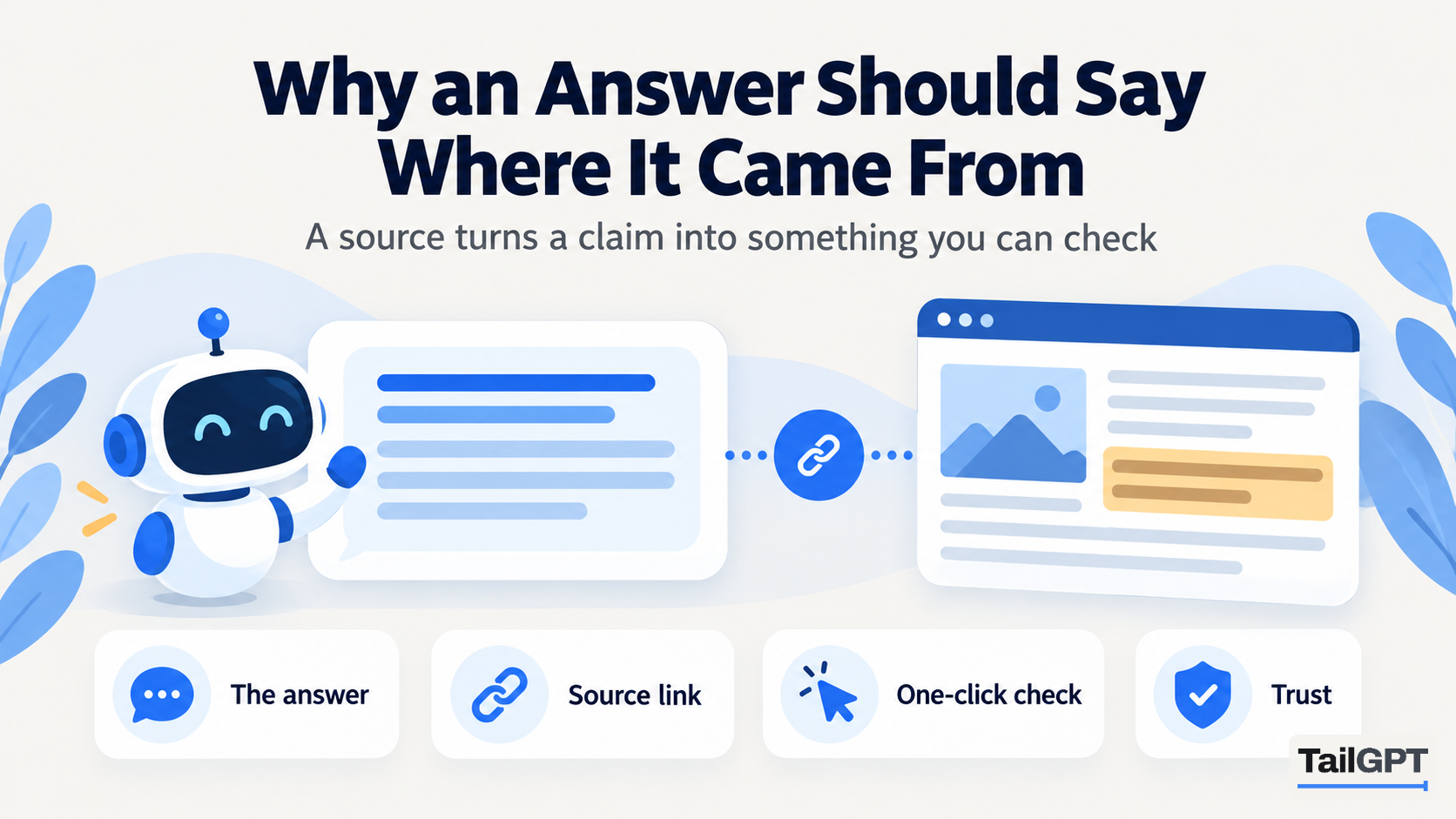
  10. Why an answer should say where it came from: a robot's answer linked to the highlighted passage on a page; the answer, source link, one-click check, trust

    Chatbot basics

    Why an Answer Should Say Where It Came From

    An answer with no source is a claim. A link to the page it came from turns it into something a visitor can check in one click, and you can correct in one edit. The source also shows you which page said the wrong thing, because an answer with no source cannot be argued with, or fixed.

    Siddharth Kajaria · 4 August 2026 · 4 min read

    Read