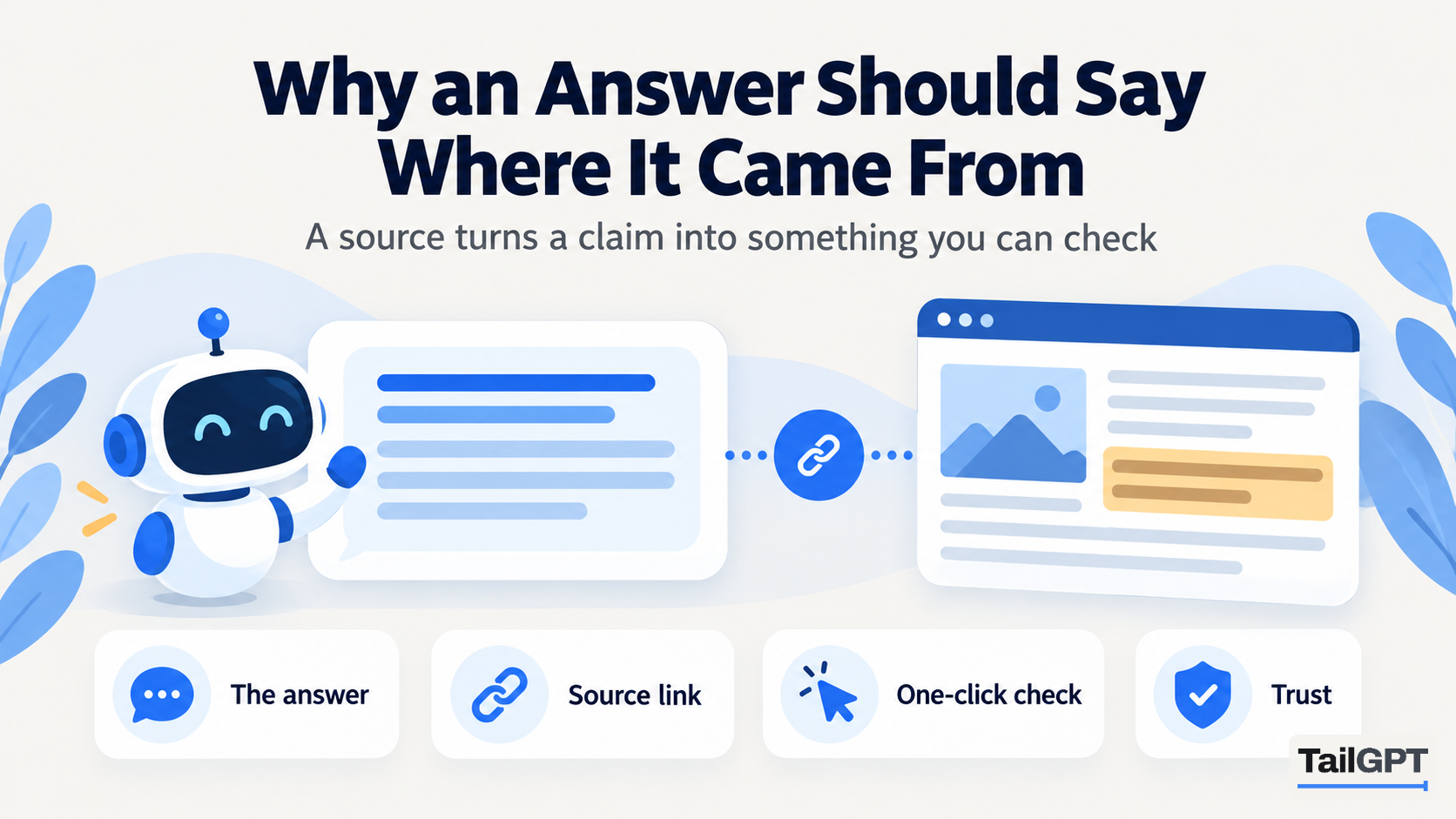
An answer with no source is a claim. A link to the page it came from turns it into something a visitor can check in one click, and you can correct in one edit.
What it does for a visitor
People do not trust a confident sentence from a chat bubble, and they are right not to. A line underneath saying which of your pages the answer came from does what a citation does anywhere: it moves the claim from "this thing says" to "your website says".
It also settles arguments before they start. A customer who has read the delivery answer with the delivery page linked beside it has seen your policy, not a paraphrase of it.
What it does for you
When an answer is wrong, the link tells you exactly where to go. Without it, a wrong answer is a mystery: you know something on your site says the wrong thing, and you get to guess which page.
Over a few weeks this turns into a quiet audit of your website. The pages that get cited most are the ones worth keeping sharp; the pages that never get cited are usually the ones nobody needed.
What to look for
- Next to the answer, not buried. A source a visitor has to hunt for does not get checked.
- A page you recognise. If the citation is a document number or an internal id, it is not a source to a customer.
- No source, no answer. An answer that cannot name where it came from should not be given.
- Several sources when an answer combines pages. Delivery cost and delivery time often live in different places.
The one thing it cannot fix
A source link proves the answer came from your website. It does not prove your website is right. If the page is three years out of date, the chatbot will cite it faithfully and the customer will trust it - which is an argument for reading your own cited pages now and then.
Citations change how you write
Once every answer names a page, you start noticing which pages are quotable. A page that opens with "Standard timelines apply" gets cited and helps nobody. One that opens with "Delivery within India takes 3-5 working days" gets cited and settles the question.
So the habit is worth adopting deliberately: put the answer in the first sentence, name the subject in it, and give the number. It makes the chatbot better, it makes the page better for the visitors who never open the chat, and it is the same shape search engines lift into a result. One rewrite, three beneficiaries.
When the source surprises you
Sooner or later an answer will cite a page you had forgotten existed - an old landing page, a duplicate of your returns policy, a draft somebody published years ago. That is the citation earning its keep: it has found a page still making promises on your behalf.
Two fixes, and they are not the same. If the page should not be answering questions, untick it. If the page should not exist at all, delete it from the website - because a page a chatbot should not quote is usually a page a customer should not land on from Google either.