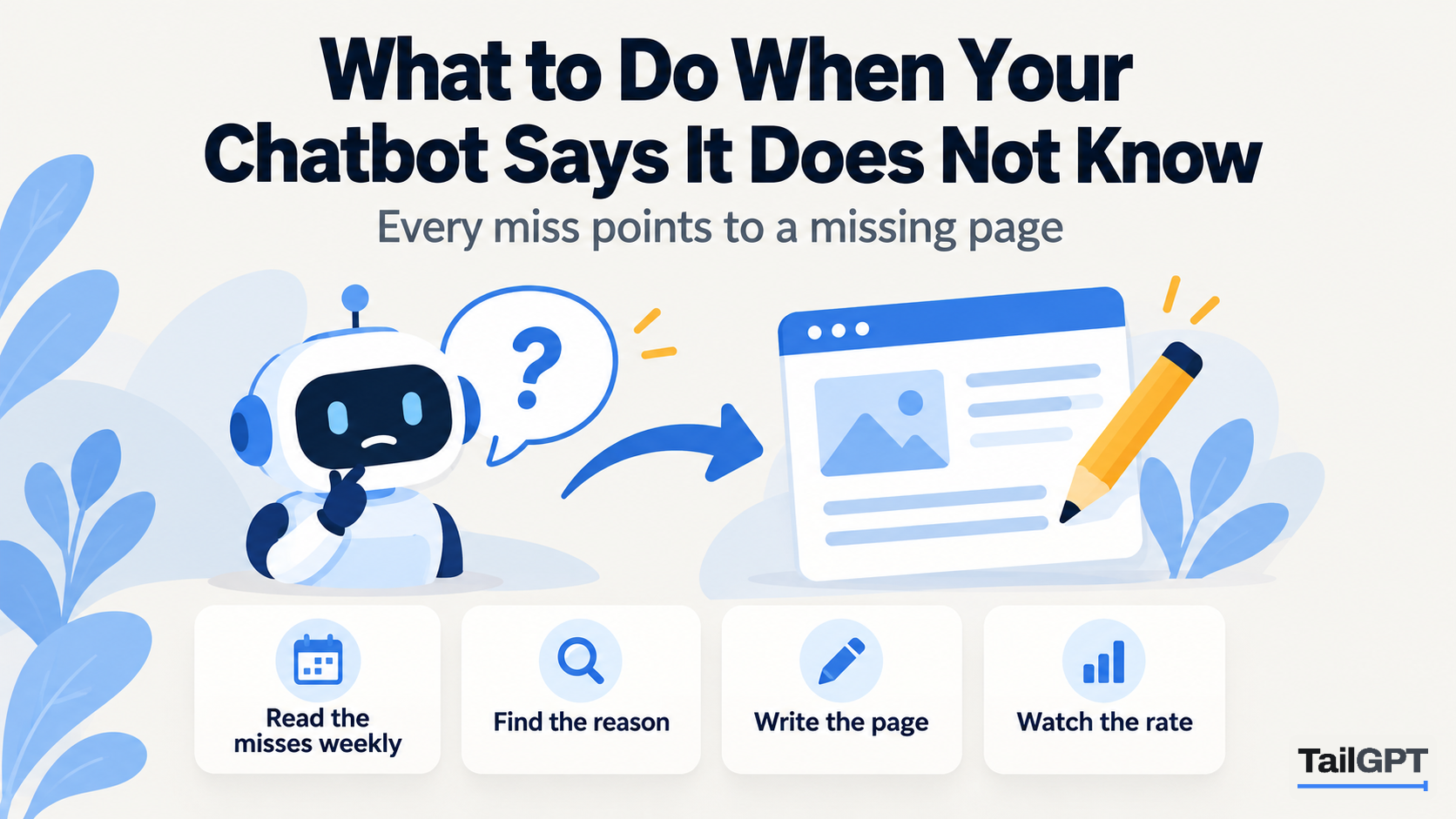
A chatbot admitting it cannot find something is working correctly. What you do with that admission is what turns it into a better website.
Read the misses weekly
Ten minutes with the list of unanswered questions is the most useful thing you will do with a chatbot. The questions cluster, and each cluster is one page you have not written. After a month you will have a content plan written entirely by your customers.
Three reasons it did not know
- The page exists but was not selected. Tick it and read the site again. This is the most common one by far.
- The page exists but does not say it. The answer is in an image, a table nobody wrote out in words, or a sentence too vague to quote.
- There is no page. Write it. The question has now been asked enough times to justify one.
What a good "I do not know" looks like
It should be short, it should not apologise three times, and it should offer the next step: an email address, a phone number, a contact page. A dead end is what makes people give up on a chat bubble; a route to a person is what makes them forgive it.
Do not fix it with instructions
Telling a chatbot to "say delivery is three days" puts a promise somewhere no customer can read and nobody will remember to update. Six months later the page says five days, the chatbot says three, and nobody can work out why.
Put it on the page instead, where it is also answering the visitors who never open the chat - and where your own team can see it.
The questions that should stay unanswered
Not every miss is a gap. "Can you give me a discount", "what is your cheapest price if I buy ten", "is my order out for delivery" - those are not website content, and a chatbot that answered them would be making promises or looking at data it should not have. Route them to a person and leave them off the content plan.
Watch the rate, not the incident
One unanswered question means nothing; a subject that fails every week means a page is missing. So look at the share of questions that go unanswered, month to month, rather than reacting to each one.
A rate that falls as you write pages means the loop is working. A rate that sits still while you write means you are writing the wrong pages - go back to the actual questions and use the customer's words, not your internal vocabulary. A rate near zero usually means something else: either your pages are unusually complete, or the chatbot is answering things it should be refusing, which is worth checking rather than celebrating.