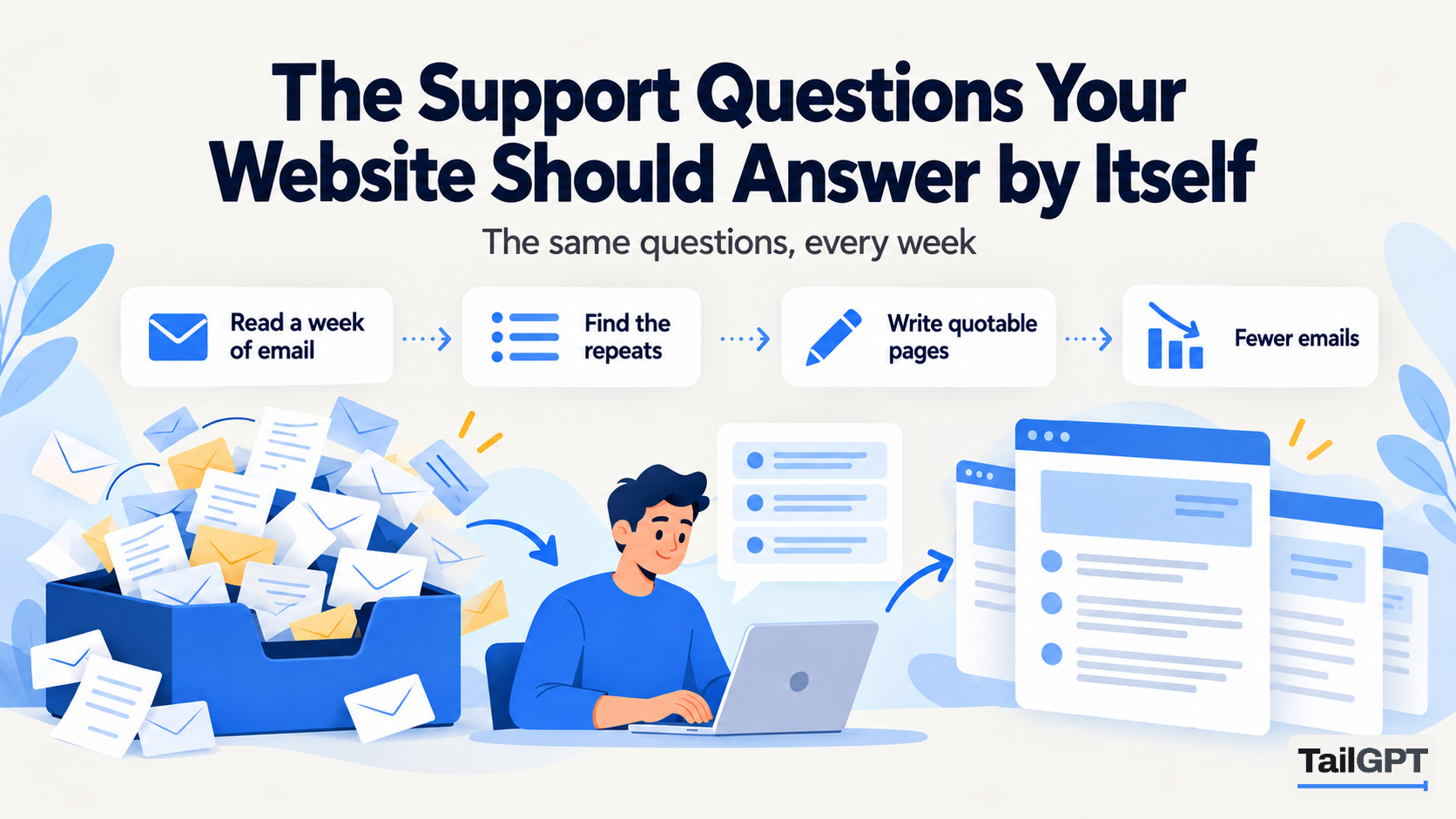
Read a week of your support inbox and you will find the same eight questions. Every one of them is already answered somewhere on your website.
The eight
- Do you deliver to where I live, and when will it arrive?
- What does delivery cost?
- Can I return it, and who pays to send it back?
- Is this in stock, in my size?
- How do I care for it, or install it, or use it?
- Which payment methods do you take?
- Do you have a shop I can visit, and when are you open?
- How do I reach a person?
Why they still arrive
Because the answer is on page four of a policy nobody opens. A visitor will type a sentence into a chat bubble long before they will use your navigation, and asking is faster than reading even when reading would have worked.
There is a second reason, and it is uncomfortable: the answer is often written in a way that does not answer. "Standard delivery timelines apply" is on the page, and it tells nobody when their parcel arrives.
Write them so they can be quoted
A page that answers well gets quoted well - by a chatbot, and by search engines. The rules are the same for both:
- Put the answer first. One sentence, then the detail.
- Name the subject. "Delivery within India takes 3-5 working days" survives being quoted on its own; "it usually takes 3-5 days" does not.
- Give the number. Ranges, days, rupees. "Promptly" is not an answer.
- One subject per page. A returns answer buried in a terms page is hard to find and easy to misquote.
Turn the gaps into pages
The questions your chatbot could not answer are the ones your website never answered either. Write those pages. The list is short, it repeats, and it shrinks every month - and each page you write also earns search traffic from people who never open the chat.
What it does to your inbox
Expect the volume to fall, not vanish. The repeats go first - delivery, returns, timings - and what is left is heavier: order problems, complaints, the genuinely unusual question. That is a real gain even when the count barely moves, because an inbox of eight hard questions is calmer than one of forty with eight hidden in it.
Two cautions. A chatbot cannot fix a policy people dislike; it will just deliver the bad news faster and more often. And if answers are wrong, volume goes up, not down - people write in to check. Both are arguments for reading what it said before deciding whether it worked.
The order to write them in
Write them in the order they cost you money. Delivery and returns come first, because they are the last doubt before somebody buys. Stock and sizing next, for the same reason. Opening hours and payment methods after that - asked often, but rarely the thing standing between a visitor and a decision.
"How do I reach a person" goes last and is the easiest: one page with an email address, a phone number and the hours they are answered. It is also the page a chatbot leans on every time it cannot help, so it is worth more than its length suggests.