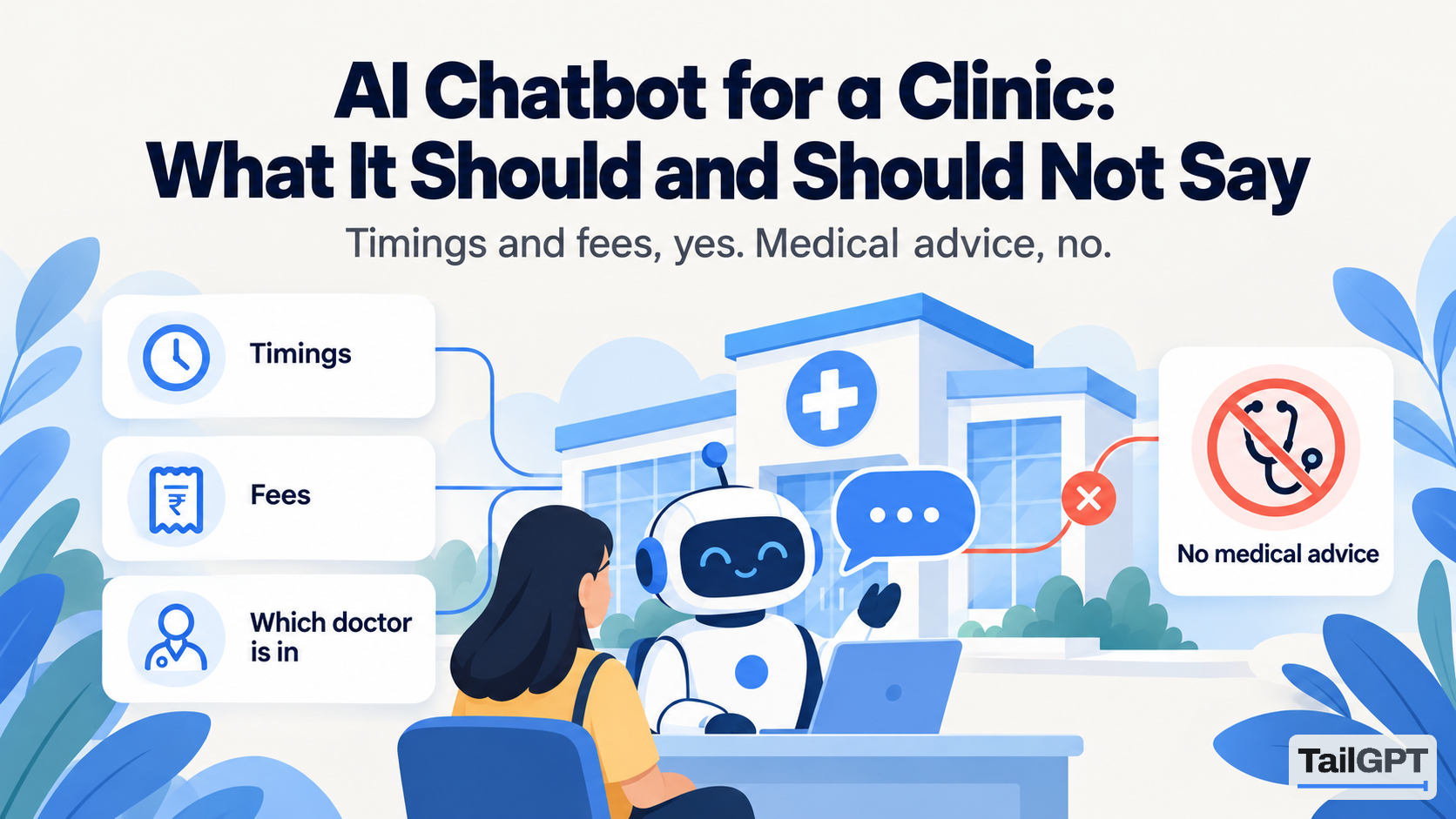
A clinic's website gets the same questions every day: timings, fees, location, what to bring, which doctor is in. A chatbot can answer those from your own pages - and must refuse everything that sounds like medical advice.
What it should answer
- Timings and days. Including which consultant sits on which day.
- Consultation fees and what a follow-up costs.
- Where you are, how to reach you, and where to park.
- How to book, and whether walk-ins are seen.
- Preparation: fasting before a test, documents to bring, how long a report takes.
- Which insurers or schemes you accept.
These are the calls that interrupt a working clinic all day, and every one of them is a sentence on a page.
The line it must not cross
A chatbot on a clinic's website must not answer "what could this pain be", "is this dose safe", "should I come in". Those are clinical judgements, and a plausible-sounding paragraph from a chat bubble is dangerous in a way that a wrong delivery date is not.
This is why the refusal behaviour matters more here than anywhere else. A chatbot that answers only from your pages cannot invent medical advice, because your website does not contain medical advice for that person. What it should do instead is say plainly that it cannot help with that and give the number to call - and your pages should say, in words, that advice comes from a clinician.
Test it before it goes live: ask it three symptom questions and one about medication. If it answers any of them with advice, it is not ready for a clinic's website.
What never goes in
Do not upload anything with a patient's name, number, report or history in it - not to a chatbot, not to any system answering strangers. The documents worth adding are the public ones: preparation instructions, the price list, the insurance list, the forms people ask for.
Keep it current, because timings change
A clinic's website goes stale faster than most: a consultant's day changes, fees rise, a branch moves. A chatbot quotes what it last read, so the re-read belongs in the same habit as updating the page. Answers that cite the page they came from make this easy to audit - if the cited page is wrong, you know exactly what to fix.
Three pages worth writing first
- Visiting us. Address, landmark, parking, timings by day, which consultant sits when, and whether walk-ins are seen.
- Fees and payment. Consultation, follow-up, common tests, the insurers and schemes you accept, and how to pay.
- Before your appointment. Fasting, documents, what to bring, how long reports take, who to call if something changes.
Between them those three cover most of what a clinic's phone rings about. Written plainly, with the answer in the first sentence, they also give the chatbot something it can quote without ever straying near clinical advice.