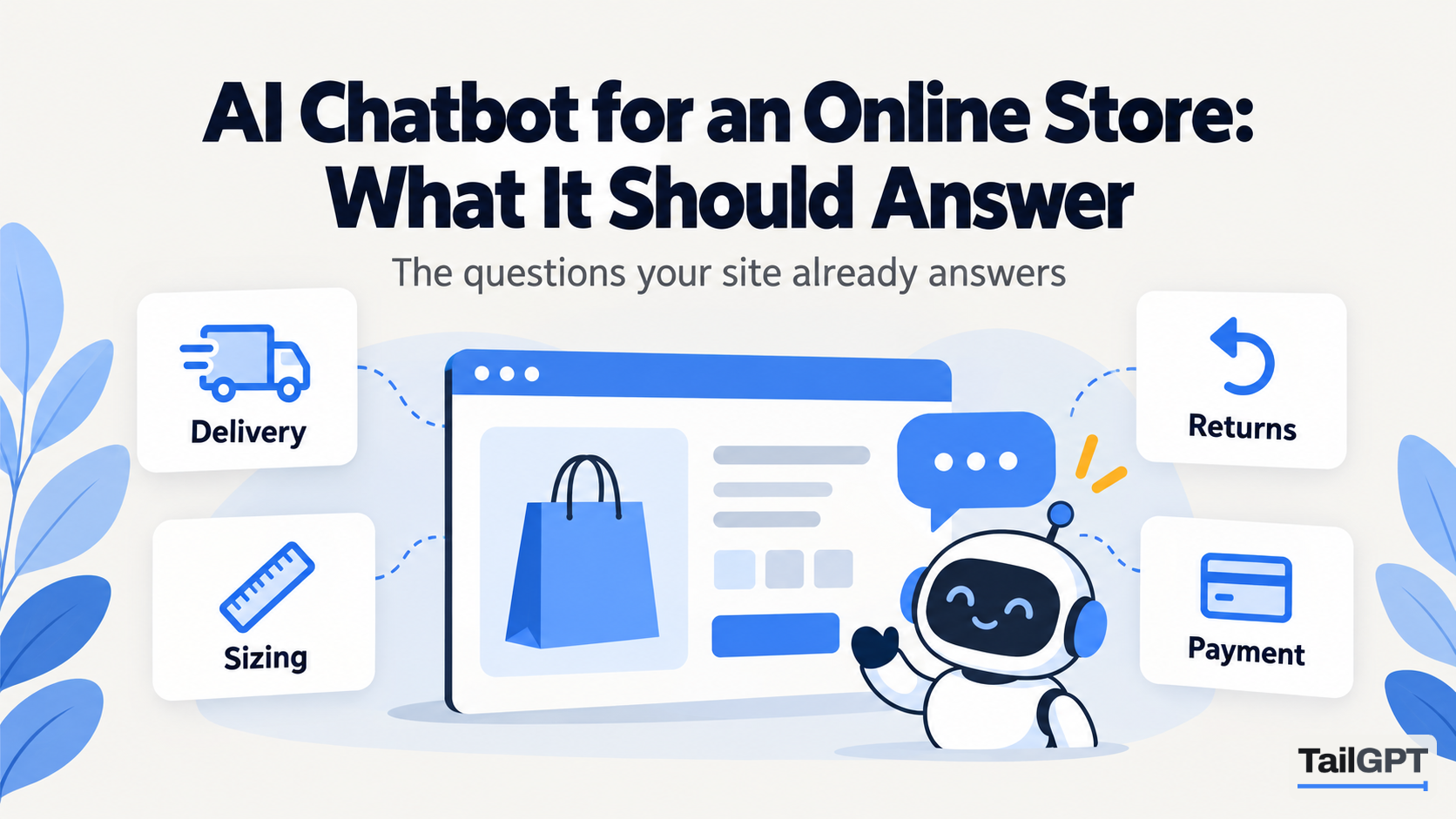
An online store's chat bubble earns its place on five questions, and every one of them is already answered somewhere on the site. The trouble is that nobody can find them at eleven at night.
The five questions that matter
- Do you deliver to my pin code, and when? The question most likely to end a sale if it goes unanswered.
- What does delivery cost, and is it free over some amount?
- Can I return this, by when, and who pays the courier?
- Will this fit? Sizing, materials, care - the questions a product page answers badly.
- Which payment methods do you take? UPI, cards, net banking, cash on delivery.
Answer those five well and a chat bubble pays for itself, because each one is a reason somebody was about to close the tab.
What it must not do
An online store is where the temptation to let a chatbot do more is strongest, and where it goes wrong fastest.
- No order status. "Where is my order" needs your order system and a logged-in customer, not a chatbot answering strangers.
- No discounts. A chatbot that can be talked into a coupon will be, and the screenshot ends up on social media.
- No stock promises it cannot see. If the product page says "in stock" and the page was read last week, that is what the chatbot knows. Say where the answer came from and let the visitor check the live page.
- No personal data. It should never ask for a phone number or an order id it has nowhere to put.
Pages worth writing before you switch it on
Most shops have a returns policy written by somebody protecting the business, not answering a customer. Rewrite it so the first sentence says the thing: how many days, who pays, what condition. The chatbot quotes the first sentence, and so does Google.
Do the same for delivery - zones, timelines, free-delivery threshold - and add a sizing or care page if your product needs one. Three clear pages beat a twenty-page FAQ nobody maintains.
What to watch after a week
Read the questions it could not answer. In a shop they cluster into three piles: things you never wrote down, things written on a product page only a specialist would understand, and order-specific questions that belong with a person. The first two are pages; the third is a handover.
Make the product pages answerable
Most shops write policy pages for customers and product pages for a catalogue. The chatbot exposes the difference immediately: it answers delivery questions well and sizing questions badly.
Fix the products people ask about most, not all of them. Write the measurements out in words as well as in a table image, say what the material is and how to wash it, and state what the product does not do or fit. A sentence like "the medium fits a 38 inch chest" is quotable; a size chart saved as a picture is invisible to everything - the chatbot, and search engines too.